The Baci ceremony, also known as Sou Khwan, is the most sacred and culturally revered traditional ritual in Laos. Held for weddings, births, the Lao New Year, or to welcome visiting guests, this animist and Buddhist ceremony seeks to summon and bind the body's wandering souls (Khwan) to bestow good fortune, vitality, and enduring prosperity.
1. What is the Baci ceremony and what is its cultural meaning?
In Laos, spiritual cosmology centers on the belief that the human body is inhabited by 32 protective spirits (known as Khwan) guarding vital organs and life faculties. When major transitions occur - such as illness, long journeys, marriages, or pivotal milestones - these wandering souls may stray, leaving a person susceptible to misfortune or spiritual disharmony.
The Baci ceremony (or Sou Khwan, literally meaning "the calling of the soul") is a sacred rite designed to coax straying spirits back and bind them firmly within the recipient. It represents one of the warmest expressions of Lao hospitality and goodwill, bringing families and neighbors together in mutual blessing.
Key ceremonial elements:
-
The Phane (offering centerpiece): An elaborate conical centerpiece hand-crafted with fresh marigolds, candles, fragrant incense, and woven banana leaves.
-
Blessed white cotton threads: Consecrated strings tied around participants' wrists to seal blessings of joy, protection, and long life.
-
The offering tray: Featuring hard-boiled eggs, sticky rice delicacies, and traditional rice liquor (lao-lao) to appease and delight visiting spirits.
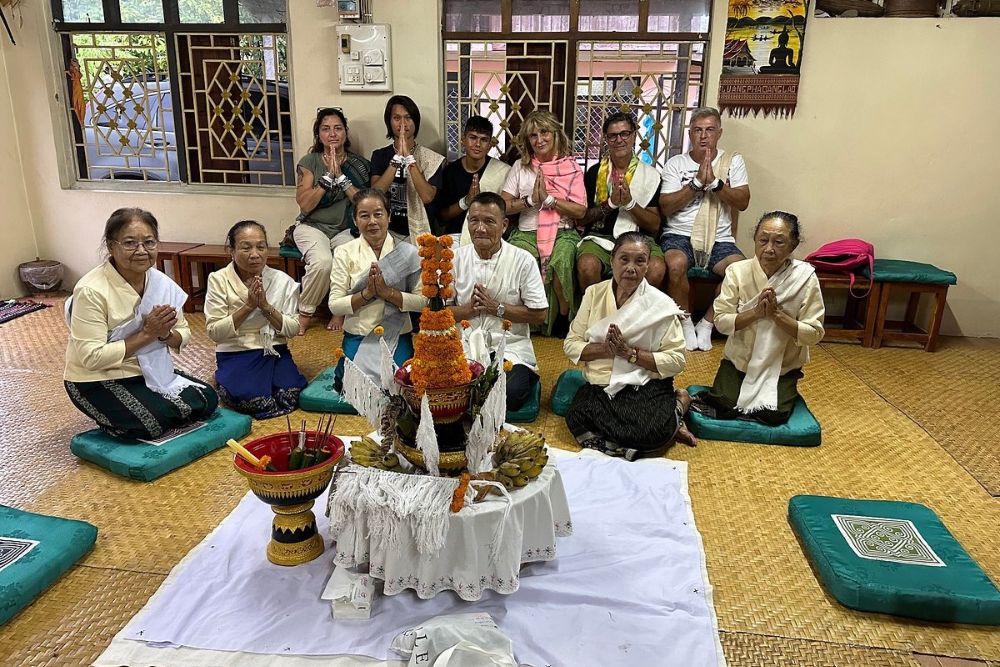
2. How a traditional Baci ceremony unfolds?
A Baci is an intimate gathering of reverence, community bonding, and heartfelt goodwill, led by a venerated village elder or former monk known as the Mor Phon.
Essential stages of this unique ritual :
-
The opening invocations: The master of ceremonies (Mor Phon) chants sacred mantras in Pali and Lao to invoke benevolent deities and ward off ill fortune.
-
Touching the Phane: Guests touch the base of the sacred floral pyramid or lightly place hands on one another's arms, forming a living human circuit of spiritual energy.
-
Tying the cotton strings: The officiant and elders tie soft white cotton threads around each person's wrists while softly murmuring personal wishes of health and happiness.
-
Feast and celebration: The ritual concludes with shared food, toasts of rice whiskey, and joyous communal fellowship.
3. Practical advice for taking part in a Baci during your Laos travels
To experience or attend a Baci ritual respectfully, keep these essential etiquette guidelines in mind :
-
When does a Baci take place? It is organized on demand to commemorate life milestones, weddings, recovery from sickness, or the warm reception of honored guests.
-
Attire requirements: Modest, respectful clothing covering both shoulders and knees is mandatory. Wearing a traditional silk or cotton sash over the shoulder is customary.
-
Active participation: Avoid cutting off or removing the cotton wrist strings right after the ceremony ; tradition dictates keeping them on for at least three full days to preserve their protective blessings. Practical tip for travelers : Arranging an authentic home-based Baci through an established local operator ensures a culturally sensitive, profoundly meaningful encounter.
4. Frequently Asked Questions (FAQ)
Can I take off the white wrist strings after the ceremony?
Do not abruptly tear or discard them on the day of the ceremony. After three days, you can untie or gently snip them with scissors, or let them fall away naturally with wear.
Is the Baci strictly a Buddhist ceremony?
The Baci originated in ancient animist folk beliefs long before the arrival of Buddhism. Over centuries, however, it blended harmoniously with Buddhist traditions, and monks frequently join in the blessings.
Why experience a Baci ceremony with Asiatica Travel?
Traveling with Asiatica Travel grants you privileged access to participate in genuine family-hosted Baci rituals in historic Luang Prabang or peaceful rural hamlets, guided by insightful local experts.
The Baci ceremony is the most touching cultural and spiritual experience in Laos. It embodies the legendary warmth and generous hospitality of the Land of a Million Elephants. Contact Asiatica Travel today to introduce this sacred cultural blessing into your bespoke journey through Laos !